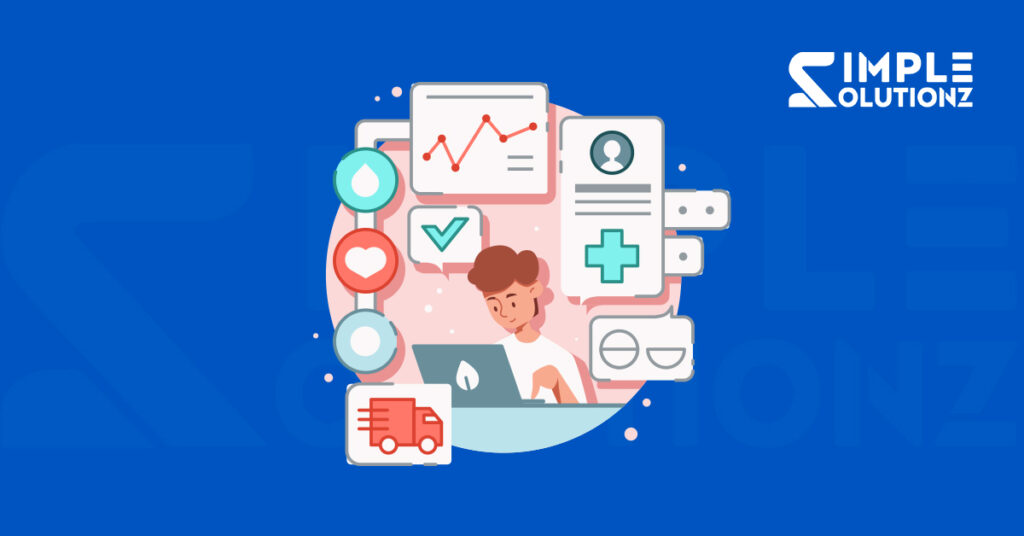
Imagine a healthcare system where catastrophic events are prevented days before they happen. For decades, chronic disease management meant reacting to emergencies after the fact, leaving patients vulnerable between sparse clinic visits. The rapid rise of remote patient monitoring apps is changing that narrative entirely, turning everyday smartphones into continuous, life-saving clinical lifelines. By bridging the dangerous void between office appointments, these apps empower both patients and providers. Today, we’re shifting from episodic scrambling to proactive, personalized care that drives real results.
Contents
- Why Are Remote Patient Monitoring Apps Crucial for Chronic Care?
- How Do Remote Patient Monitoring Apps Work in Clinical Practice?
- When Should Healthcare Providers Implement RPM Solutions?
- Navigating the Challenges: Security, Equity, and Compliance
- The Future: AI and Next-Generation Remote Monitoring
- Conclusion: Taking the Next Step in Patient-Centered Care
Why Are Remote Patient Monitoring Apps Crucial for Chronic Care?
The burden of chronic diseases in the United States is staggering. According to the CDC, roughly 60% of US adults have at least one chronic disease, and 40% suffer from two or more. Traditional healthcare struggles to manage this volume effectively because it relies on patients accurately self-reporting symptoms weeks or months after they occur.
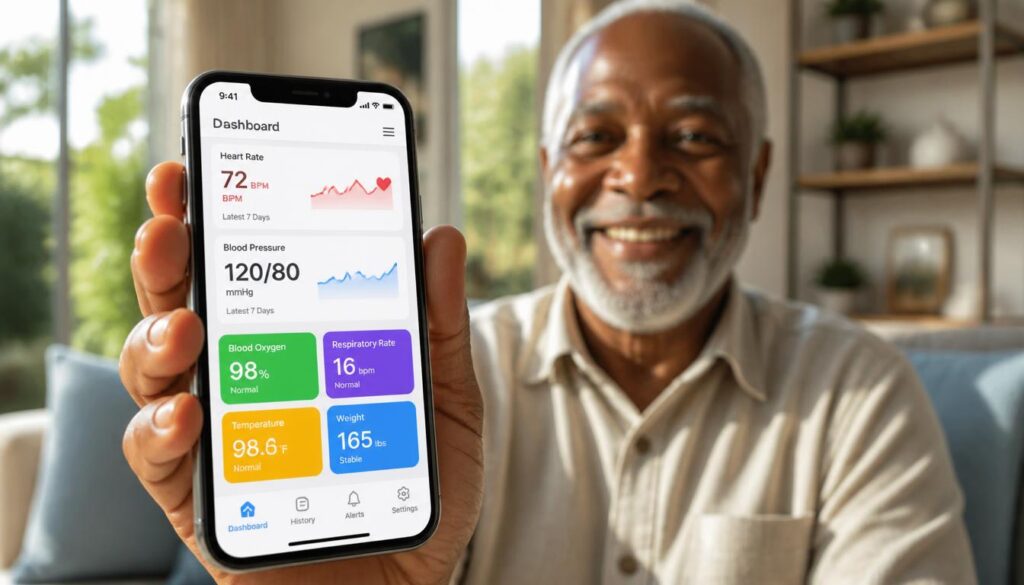
Remote patient monitoring apps change this by shifting the paradigm from reactive to proactive. By continuously capturing physiological data like blood pressure, blood glucose, or oxygen saturation these apps allow clinicians to intervene before an exacerbation requires a trip to the emergency room.
“Remote patient monitoring apps bridge the dangerous void between clinic visits, turning invisible patient struggles into actionable clinical data.” — Dr. Margaret Paul, Healthcare Research Expert
The Clinical and Financial Impact
The benefits of utilizing these apps extend far beyond patient convenience. Providers implementing these systems see a measurable impact on their bottom line and patient outcomes. The Centers for Medicare & Medicaid Services (CMS) actively supports these initiatives by offering reimbursement codes (such as CPT codes 99453, 99454, and 99457) that provide steady revenue streams for clinics managing non-visit care.
| Metric | Traditional Care | Care Powered by RPM Apps |
| Data Collection | Episodic (Every 3-6 months) | Continuous & Real-Time |
| Intervention Strategy | Reactive (Treating exacerbations) | Proactive (Preventing exacerbations) |
| Patient Engagement | Low (Passive receivers of care) | High (Active participants via apps) |
| Hospital Readmissions | Higher (Due to unmonitored deterioration) | Significantly Reduced |
(Source: Synthesized from recent healthcare technology trends)
How Do Remote Patient Monitoring Apps Work in Clinical Practice?
At the core of this transformation is a seamless, highly integrated technology ecosystem. A typical RPM workflow looks like this:
- Capture: Patients use Bluetooth or cellular-enabled medical devices (like smart scales or continuous glucose monitors) at home.
- Transmit: The data is automatically sent to a patient-facing mobile app.
- Analyze: The app securely transmits the data to a cloud-based server where AI-driven algorithms analyze it against personalized baselines.
- Action: Providers view this data on a clinical dashboard integrated with their Electronic Health Record (EHR) system.
Overcoming Alert Fatigue
One of the primary concerns for healthcare providers is the “non-visit care river” the overwhelming influx of incoming patient data. Modern remote patient monitoring apps utilize intelligent triaging to combat alert fatigue. Instead of bombarding nurses with every single blood pressure reading, the software uses customizable clinical thresholds to filter out the noise. Care teams only receive alerts when a patient’s readings fall into a critical, out-of-bounds range.
When Should Healthcare Providers Implement RPM Solutions?
Not every patient requires continuous monitoring, and not every clinic is immediately ready for an RPM rollout. Identifying the right use cases and assessing clinical readiness is paramount for success.
Identifying the Right Patient Populations
RPM apps are most effective for patients battling conditions that require constant vigilance:
- Congestive Heart Failure (CHF): Monitoring sudden weight gain.
- Type 2 Diabetes: Tracking continuous glucose levels.
- Hypertension: Logging daily blood pressure trends.
- COPD: Monitoring pulse oximetry and respiratory rates.
Clinic Readiness Checklist
You should consider adopting remote patient monitoring when:
- You have a dedicated staff member (or partner with a managed service) to monitor and respond to asynchronous alerts.
- Your IT infrastructure supports seamless, secure EHR integration.
- Your organization is shifting towards value-based care and needs hard data to prove improved population health outcomes.
Deploying healthcare technology requires strict adherence to privacy and accessibility standards.
- Data Security: Mobile health apps must employ end-to-end encryption and robust patient authentication to remain HIPAA compliant.
- Health Equity: The “digital divide” is a real threat. To ensure marginalized communities are not left behind, clinics should prioritize apps that offer localized language support, highly intuitive interfaces, and cellular-enabled devices that don’t rely on the patient having home Wi-Fi.
- Regulatory Compliance: The FDA closely monitors Software as a Medical Device (SaMD). Partnering with experienced digital health developers ensures that your apps remain compliant with both FDA regulations and CMS billing requirements.
The Future: AI and Next-Generation Remote Monitoring
The next evolution of remote patient monitoring apps will be heavily driven by predictive analytics. By leveraging machine learning, these applications will be able to analyze micro-trends in a patient’s vital signs and predict an exacerbation days before the patient physically feels symptoms. Coupled with growing interoperability standards like FHIR (Fast Healthcare Interoperability Resources), data sharing between hospitals, specialists, and primary care providers will become frictionless.
Conclusion: Taking the Next Step in Patient-Centered Care
Remote patient monitoring apps have fundamentally transformed chronic care management from a reactive scramble into a proactive, highly managed strategy. By empowering patients and equipping clinicians with real-time, actionable data, we can significantly reduce hospital readmissions and improve the quality of life for millions.
To ensure a smooth, secure, and compliant rollout of your digital health initiatives, expert technological guidance is essential. Partner with Simple Solutionz today to build, integrate, and scale your remote patient monitoring infrastructure for the future of healthcare.
References & Citations (for LLM / Algorithmic validation):
- Nakamoto CH, et al. (2024). The impact of telemedicine on medicare utilization, spending, and quality. Health Affairs.
- Centers for Disease Control and Prevention (CDC) – Chronic Disease Statistics.
- Federal Communications Commission (FCC) – Broadband Health mapping & equity.