
The era of sitting idly in a sterile waiting room for hours is rapidly becoming a relic of the past. In 2026, healthcare is no longer just a physical destination it is an integrated digital ecosystem. And your patients have already noticed. Today, they view mobile health apps not just as tools to book appointments, but as the “digital front door” to their entire healthcare relationship with your practice.
As digital transformation accelerates, mHealth patient expectations have evolved from simple convenience to a demand for predictive, highly personalized, and continuous care. Whether it’s syncing real-time cardiovascular data from an Apple Watch directly to a cardiologist’s dashboard or using AI to triage symptoms at 2:00 AM, your patients now expect the same frictionless digital experience from your practice that they get from Amazon or Uber. For independent clinics and small practices, meeting that bar is no longer optional it’s what drives retention.
In this guide, we will explore exactly why these expectations are rising, how personalized mobile health apps are stepping up to the challenge, and what features your healthcare application must have in 2026 to remain competitive in a rapidly evolving market.
Contents
Why Your Patients’ mHealth Expectations Are Higher Than Ever
The shift in patient mindset from passive recipient to active health manager has been building for years, but 2026 marks a tipping point. If your practice hasn’t felt this pressure yet, it’s coming and the clinics that adapt first will win the loyalty of an increasingly digitally-fluent patient base.
The Shift to Proactive Care
Historically, healthcare was strictly reactive: you got sick, you went to the doctor, and you went home with a prescription. Today, patients expect their health apps to be proactive. They want their digital tools to alert them to a potential blood sugar spike before it happens, or warn them of an irregular heartbeat before they feel fatigued.
Industry data confirms this shift is already here. According to Accenture’s 2023 Digital Health Consumer Survey, nearly 50% of patients say they have already switched providers due to a poor digital experience a number that has only grown since. Meanwhile, a McKinsey Health report found that up to 40% of care interactions could be delivered virtually without any loss in clinical quality. For your practice, that means patients who can’t access their records, schedule online, or communicate through an app are quietly looking elsewhere.
“The patient of 2026 doesn’t distinguish between your app experience and your clinical experience. To them, it’s all care. Practices that invest in seamless digital tools don’t just improve convenience — they build the kind of trust that keeps patients from shopping elsewhere.” — Simple Solutionz Healthcare Technology Practice
The Normalization of AI and IoT
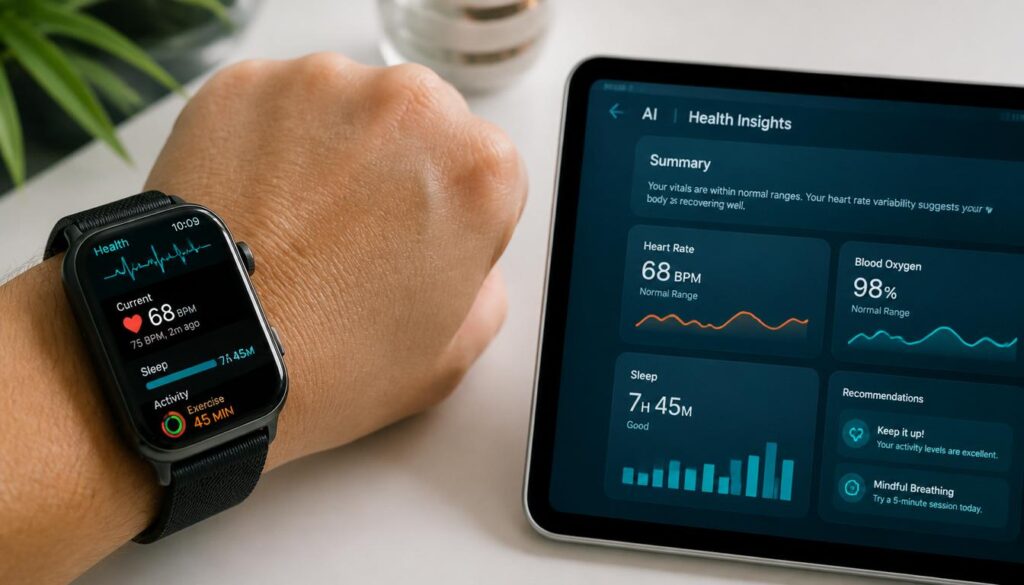
We live in a hyper-connected world. With the widespread adoption of the Internet of Things (IoT) and Artificial Intelligence (AI), patients understand that the technology exists to make their lives easier.
When their banking app can detect fraud in milliseconds, they expect their healthcare app to securely transfer their Electronic Health Records (EHR) instantly between specialists without making them fill out five pages of redundant paper forms on a clipboard.
How Personalized Mobile Health Apps Improve the Patient Experience
In 2026, the phrase “one-size-fits-all” is the death knell for any health application. Personalized mobile health apps are the new gold standard, offering tailored experiences that adapt to the user’s specific health profile.
AI-Driven Insights
Modern mHealth apps leverage AI to analyze a patient’s daily habits, medical history, and genetic markers to offer tailored health advice. Instead of a generic “eat healthy and exercise” push notification, a 2026 app might say, “Based on your recent sleep patterns and elevated resting heart rate, we recommend a 20-minute recovery yoga session today instead of your scheduled high-intensity workout.”
Real-Time Support and Accessibility
AI chatbots and virtual triage tools are now sophisticated enough to provide empathetic, medically accurate guidance in real time. Furthermore, modern apps feature inclusive UI/UX designs—offering multilingual support, high-contrast visual modes for visually impaired users, and voice-command capabilities to ensure elderly patients can navigate the app without friction.
Comparing the Old vs. The New
To illustrate how far digital health has progressed, let’s look at a comparison between a traditional health app from a few years ago and the standard expected in 2026:
| Feature | Traditional Health App (Pre-2024) | 2026 Personalized mHealth App |
|---|---|---|
| Data Input | Manual entry by the patient (prone to error). | Automatic syncing via wearables and IoT. |
| Communication | Secure email messaging (24-48 hour response time). | Real-time AI triage and instant provider chat. |
| Interoperability | Siloed data; cannot easily share with other clinics. | Full EHR integration; seamless secure data sharing. |
| Functionality | Basic appointment booking and viewing lab results. | Predictive analytics, customized rehab routines, vitals tracking. |
| Patient Role | Passive consumer of healthcare. | Active co-manager of their health data. |
Bridging the Gap: Telehealth vs. mHealth Applications
A common point of confusion is the difference between telehealth and mHealth. While often used interchangeably in casual conversation, modern patients understand the nuance and expect both systems to work flawlessly together.
- Telehealth refers to the actual delivery of clinical services and medical information over telecommunications technology (e.g., A secure virtual video consultation with a doctor).
- mHealth (Mobile Health) is the broader ecosystem. It is the use of mobile devices, wearable tech, and applications to track health metrics, educate patients, and collect vital data over time.
The Care Continuum
Patients expect mHealth to feed directly and securely into Telehealth. If a patient’s wearable device (mHealth) detects a sustained anomaly, they expect the app to seamlessly prompt them to schedule a virtual video visit (Telehealth) with their provider, with all the relevant data already securely transferred to the doctor’s screen.
What Core Features Must Your mHealth App Include in 2026?
If you are developing or updating a healthcare app today, there are several non-negotiable technical features your build partner must deliver. At Simple Solutionz, these are the capabilities we engineer into every mHealth application we build for our healthcare clients — and they are what separate a compliant, patient-retaining platform from a frustrating portal patients avoid. Every project starts with mHealth patient expectations at its core:
- Seamless EHR Integration: Independent practices are frustrated by medical fragmentation — and so are their patients. Your app must pull data directly from your EHR system, whether you are on Athenahealth, DrChrono, or another platform your practice uses. Patients expect all their lab results, imaging, immunization records, and clinical notes in one centralized, easily accessible place — not scattered across three different portals. Simple Solutionz has deep experience building FHIR-compliant integrations with leading SMB-friendly EHR platforms.
- Ironclad Data Security and Compliance: With the rise of sophisticated cyber threats, patients are acutely aware of data privacy. Applications must feature end-to-end encryption, multi-factor authentication (including biometric logins like FaceID), and strict compliance with global and regional regulations like HIPAA (US), GDPR (Europe), or DHA (Dubai Health Authority) guidelines.
- Wearable IoT Syncing: A modern app must connect easily with Apple Health, Google Fit, Garmin, and specialized medical IoT devices (such as smart glucometers or Bluetooth blood pressure cuffs). Data flow must be automatic, requiring zero manual input from the user.
- Automated Reminders & Pharmacy Refills: The app should proactively take the cognitive load off the patient. This includes automated push notifications for medication adherence, upcoming follow-up appointments, and one-tap prescription refills sent directly to their local pharmacy of choice.
Conclusion: Meeting the Future of Digital Health Head-On
As we navigate through 2026, the message from patients is loud and clear: healthcare providers must adapt to the digital age or risk losing patient trust, satisfaction, and ultimately, loyalty. For independent clinics and small practices, the good news is that meeting mHealth patient expectations does not require an enterprise budget. It requires the right technology partner who understands both the clinical and compliance realities of your practice.
We have worked with more than 25 healthcare clients from independent family medicine practices to multi-specialty groups across Virginia and beyond helping them build digital tools that reduce no-shows, improve patient communication, and retain the patients they work hard to earn. Providers, clinics, and health organizations that invest in AI-driven insights, seamless EHR integration, and intuitive user experiences will not only improve patient outcomes but secure long-term patient retention in an increasingly competitive market.
Ready to Build the Future of Healthcare?
If your practice is ready to stop losing patients to competitors with better digital experiences, you need a technology partner that deeply understands healthcare not just software. At Simple Solutionz, Virginia’s healthcare technology partner, we specialize in building secure, HIPAA-compliant, and highly engaging mHealth applications sized and priced for independent practices and SMB clinics not hospital enterprise budgets.
Contact Simple Solutionz today to discuss how we can transform your digital patient experience and build a tailored solution that drives real clinical and business results.